Chicory, Catalogna (Cichorium intybus)
Common Names
Catalogna Chicory, Puntarelle, Common Chicory, Blue Sailors, Coffeeweed, Wild EndivePlant Family
Asteraceae (Daisy Family)Native to North America?
No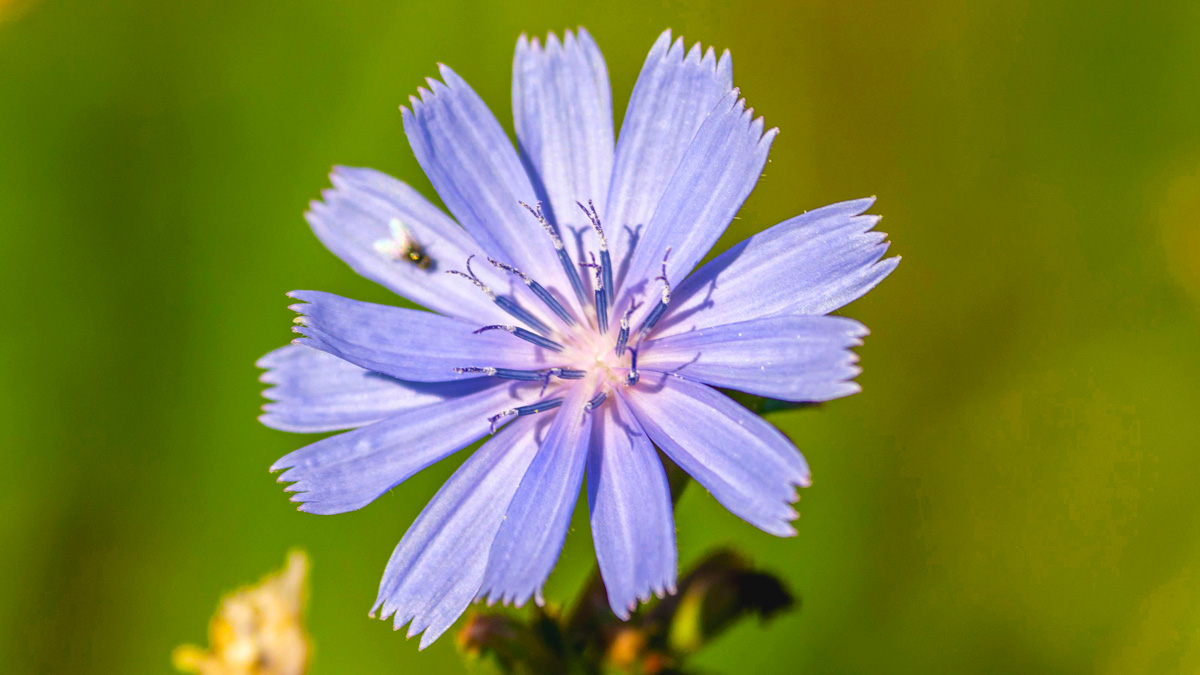
Description/Taxonomy
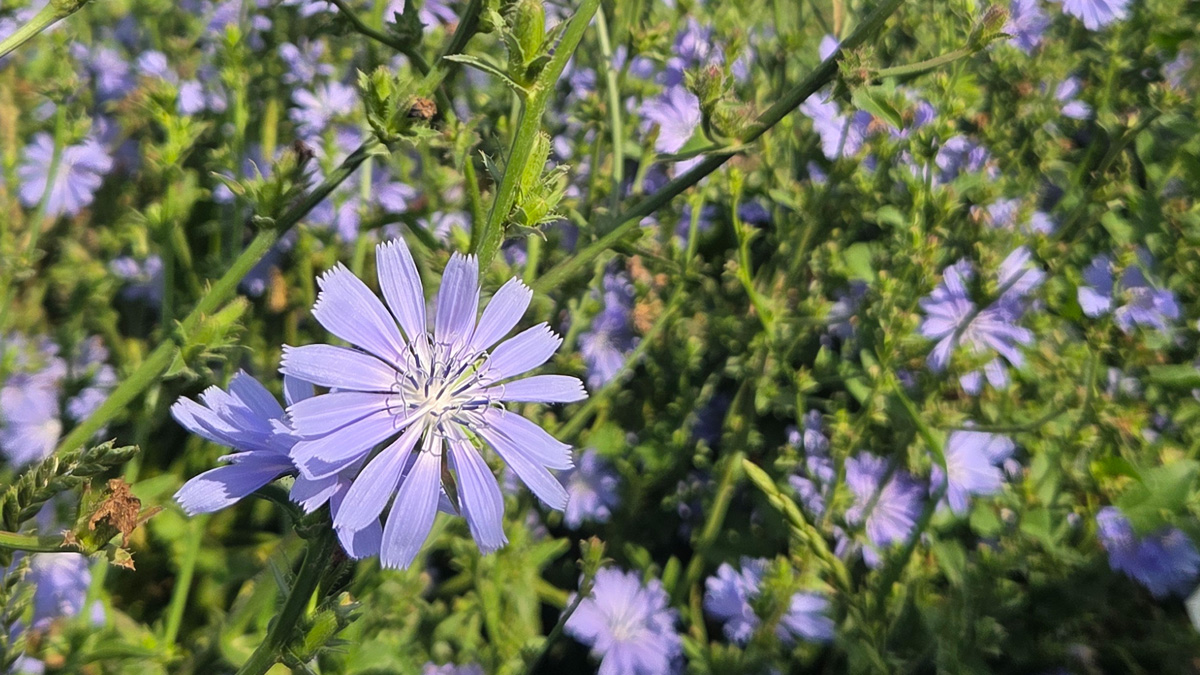
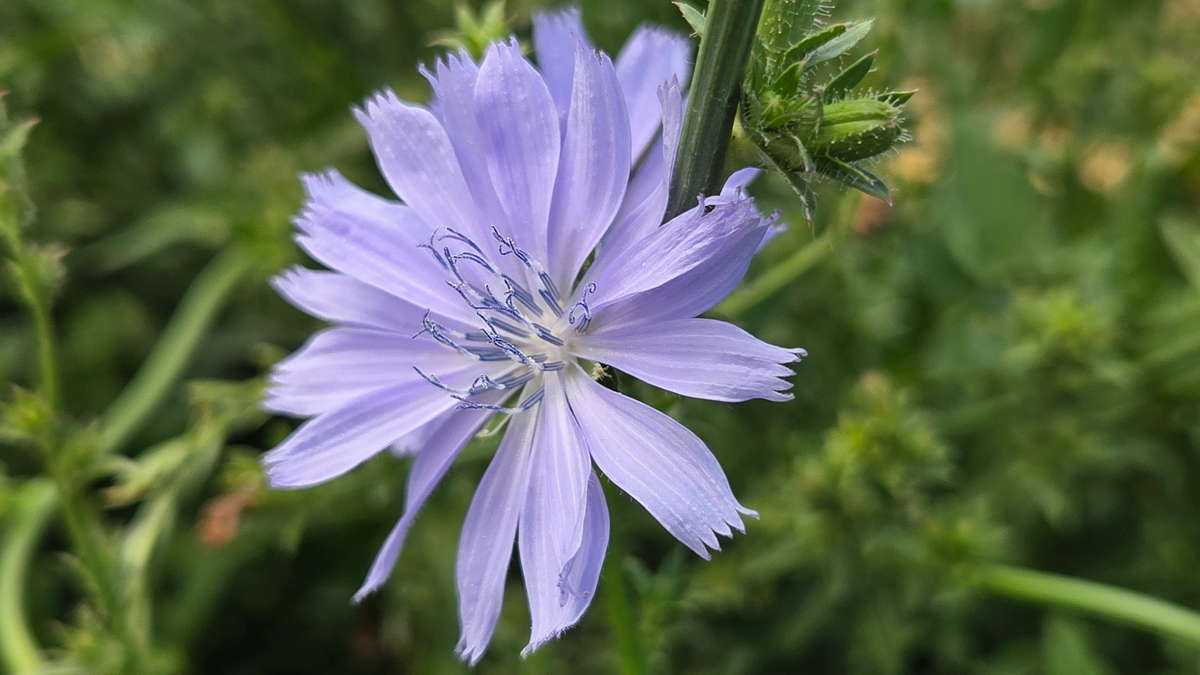
Catalogna chicory (Cichorium intybus var. foliosum), also known as puntarelle, includes a whole subfamily of chicory and is used throughout Italy. Chicory is a perennial plant with a biennial cycle. In the first year, the plant develops a basal rosette of leaves, while in the second year, it develops a tall flowering stem. Including the stem, the plant can reach a height of 1.5 meters, but it usually stays within half a meter. The plant produces characteristic bright blue flowers and has deeply lobed, dandelion-like leaves.
History
Historically, chicory was grown by the ancient Egyptians as a medicinal plant, coffee substitute, and vegetable crop and was occasionally used for animal forage. Recorded usage of chicory dates back to the Ancient Egyptians, who ground up its leaves, root and flowers for medicinal purposes. Chicory was taken into cultivation as a food plant in the 17th century, although recipes including chicory are known from Roman times. Its importance further increased in the 18th century, when a gardener found out that, after roasting, its roots can spice coffee. Root chicory has long been cultivated in Europe as a coffee substitute, particularly in the Mediterranean region where the plant is native.
Parts Used
Leaves, roots, flowers
Hickok Farms Products
Coming Soon
Affiliate Disclosure: As an Amazon associate, we may earn commissions from qualifying purchases made through our links to Amazon.com products.
Products
Cultivation
Best grown in deep, well-drained fertile soil to encourage leafy growth (for greens) and deep rooting (when grown for the roots). Chicory Prefers well drained soil with plenty of organic matter, but will also tolerat poor soils. It performs best when temperatures are below 75 degrees F (24 C.), but consistently blooms in mid-summer heat, even tolerating triple digit temperatures. While Chichory is mainly grown for salad greens it can also be blanched, and new growth can be grown in the dark to make the greens more mild. - which is how belgium endive is produced.
Growing Zones
3-10 (perennial in zones 3-9, grown as annual in zone 10)
Light Requirements
Full Sun to Part Shade
Soil Moisture
Medium to Dry (well-drained)
Mature Height
1' - 5' tall (depending on variety and growing conditions)
Mature Spread
1' - 2' wide
Bloom Time
Mid to Late Summer (blue flowers)
Advantages
Drought tolerant once established, attracts pollinators, deep taproot improves soil, deer resistant, self-seeding, edible leaves and roots, can be grown for coffee substitute, excellent cut flowers
Constituents
Rich in inulin (prebiotic fiber), vitamins A, C, and K, folate, potassium, manganese, and various bioactive compounds including sesquiterpene lactones that contribute to its characteristic bitter taste.
Culinary Uses
Its leaves are eaten as a vegetable or in a salad. The roots can be boiled and eaten with butter and are sometimes used as a flavor additive to coffee. Catalogna variety is particularly popular in Italian cuisine, where young leaves are used in salads and the roots are roasted as a coffee substitute. The ground root can serve as a sugar substitute due to its sweetness.
Herbal and Medicinal Uses
In traditional herbal medicine, chicory root has been used to support digestion, liver health, and as a diuretic. The plant has been traditionally used for its prebiotic properties due to high inulin content, which supports digestive health and beneficial gut bacteria.