Goldenrod (Solidago canadensis)
Common Names
Canada Goldenrod, Canadian Goldenrod, Tall GoldenrodPlant Family
Asteraceae (Aster/Daisy Family)Native to North America?
Yes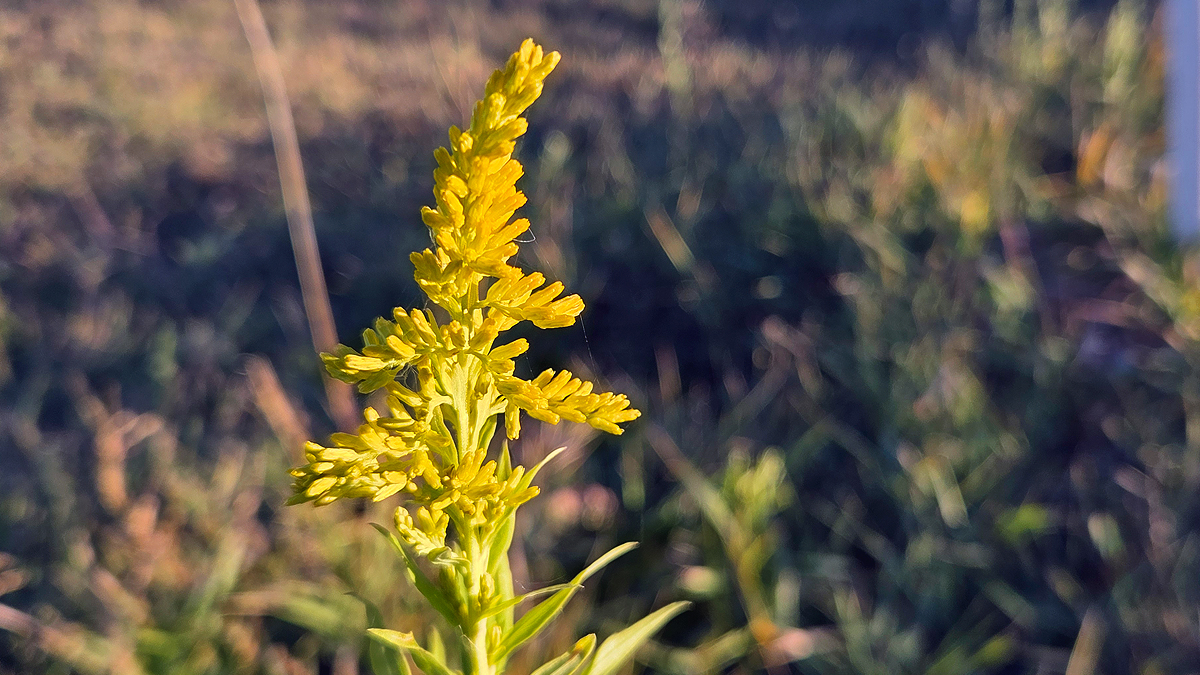
Description/Taxonomy
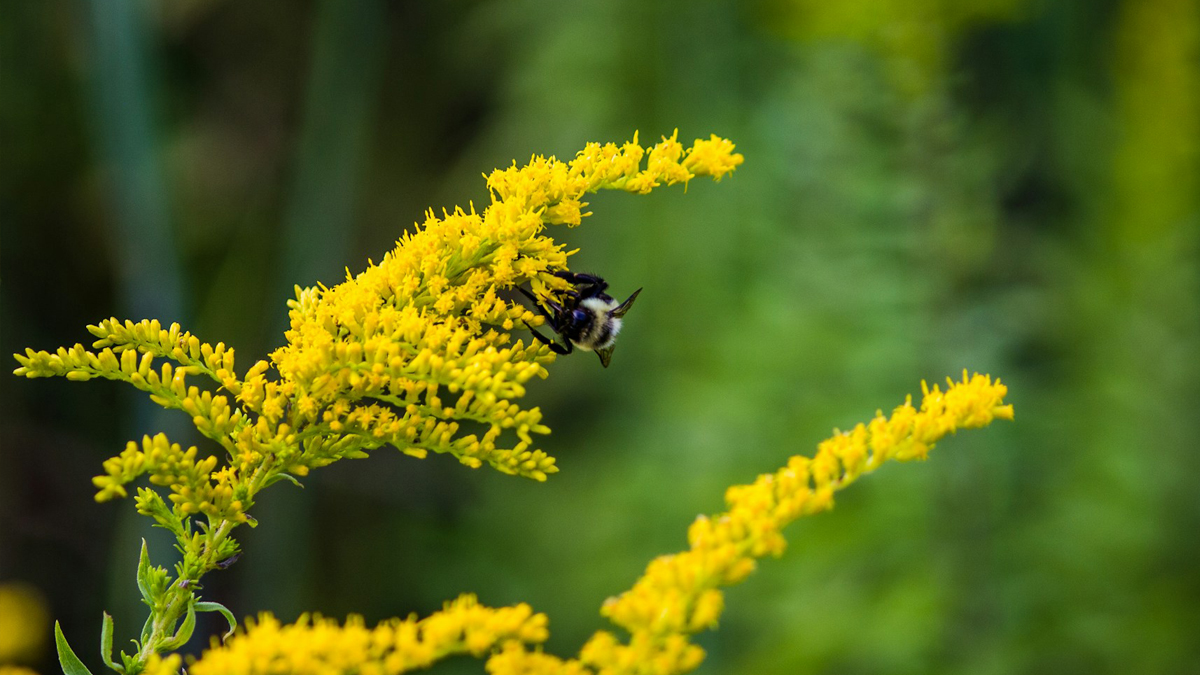
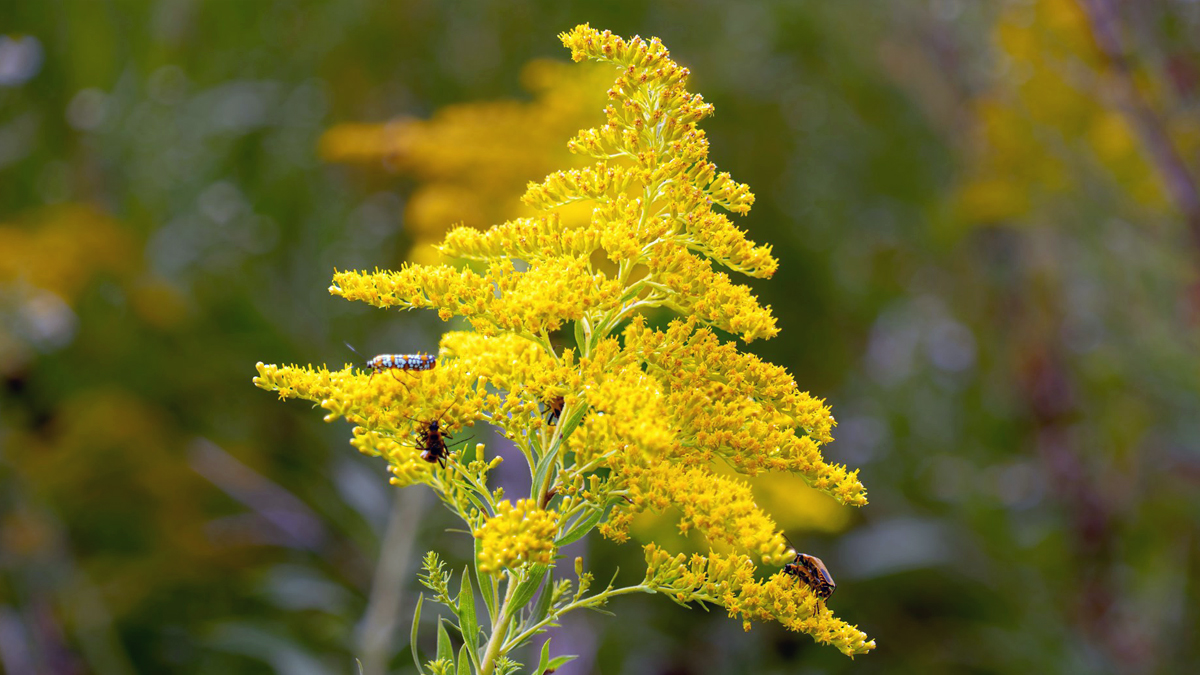
This rhizomatous herbaceous perennial forms clumps of upright, hairy stems typically 2 to 6 ft (0.6 to 1.8 m) tall, occasionally reaching 8 ft in ideal conditions. The alternate, lance-shaped leaves are 3 to 6 inches long with sharply toothed margins and may be hairy on the veins beneath. From late summer into fall, the plant produces broad, pyramidal, cascading plumes of tiny golden-yellow flower heads, each cluster holding hundreds to over a thousand blooms. Each flower head is about 1/8 inch across, with 8 to 15 ray flowers surrounding a few disc flowers. The Latin genus name Solidago derives from the Latin solidare, "to make whole," referring to its traditional use in wound healing, and the specific epithet canadensis means "of Canada." The fruit is a small brown achene topped with white hairs for wind dispersal. Due to its wide range there are several regional varieties that differ in size, leaf shape, and flower arrangement. It is often confused with Solidago altissima (Tall Goldenrod).
History
Canada Goldenrod is native across much of Canada and the United States and has long been used by Indigenous peoples as a medicinal plant, particularly for treating wounds, sore throats, and inflammation. Its name refers to its traditional wound-healing reputation. The plant was introduced to Europe in the 17th century as an ornamental and has since naturalized widely, where it is sometimes considered invasive. Goldenrod is frequently blamed for hay fever, but this is a long-standing misconception: its pollen is heavy and sticky and carried by insects, while the true culprit is usually ragweed (Ambrosia), which blooms at the same time.
Parts Used
Flowers, leaves, and aerial parts
Hickok Farms Products
Coming Soon
Cultivation
Easily grown in average, dry to medium moisture, well-drained soils in full sun, though it tolerates light afternoon shade and a wide range of soils including clay. It performs best in poor to moderately fertile soil, as rich soil can encourage floppy growth. Plants spread aggressively by rhizomes and self-seeding, so they are best suited to meadows, naturalized areas, and large pollinator gardens rather than small formal beds. Propagate by division in fall or spring, or by seed sown in fall or cold-stratified for spring planting. Cut back faded stalks in late fall or early spring, and deadhead before seed set if spread is a concern. Generally free of serious pests, though rust, powdery mildew, leaf spot, aphids, beetles, and gall-forming insects may occur.
Growing Zones
3-9
Light Requirements
Full Sun (tolerates light partial shade)
Soil Moisture
Dry to Medium (tolerates moist, well-drained soils)
Mature Height
2' - 6' tall
Mature Spread
2' - 5' wide (spreads by rhizomes)
Bloom Time
July to October (peak late summer to fall)
Advantages
A vital late-season nectar and pollen source for bees, butterflies including monarchs, and migrating pollinators; larval host plant for moths such as the Wavy-lined Emerald; seeds feed birds; drought-tolerant once established; low-maintenance; tolerates clay soil; showy golden plumes with good cut and dried flower value; attracts beneficial insects; excellent for meadows, rain gardens, and native plantings.
Constituents
Flavonoids (including rutin, quercetin, and kaempferol glycosides), saponins (including leiocarposide), phenolic acids, diterpenes, tannins, and essential oils.
Herbal and Medicinal Uses
Traditionally used as a diuretic and urinary tract tonic, and for wounds, sore throats, arthritis, and inflammation. Folk medicine has also applied it to allergies, asthma, hypertension, and tuberculosis, though these uses are not well supported by clinical evidence. The leaves and flowers are commonly prepared as a tea and the aerial parts are considered edible. Goldenrod is closely related to ragweed within the same plant family, so people with Asteraceae allergies should use caution. Always positively identify plants before consuming them, and consult a healthcare provider before medicinal use.